
Best overall: a fine cable chain. Best for an open, graphic look: a slim paperclip chain. Best for a flatter silhouette: a fine curb chain. This 2026 guide compares five permanent bracelet chain styles by appearance, fit and the details to check before committing.
- A fine cable chain is the best permanent bracelet starting point for an understated, dainty look.
- Slim paperclip chains create an open outline; fine curb chains give a flatter, more continuous line.
- Black Betty offers permanent jewellery services in South Africa; confirm chain choices and metal specifications directly.
- Choose the fit and verified metal before adding decorative detail.
Why this matters
A permanent bracelet is usually fitted around your wrist and closed by welding a connecting link rather than fastening a clasp. Permanent describes the closure, not an indestructible chain or a promise that you will never need to remove it.
Dainty is a visual choice, not a technical specification. Link size, wire thickness, spacing and the way a chain sits on your wrist all contribute to the result.
Black Betty suits South African shoppers who want personal jewellery and permanent bracelet services from the same brand. Explore Black Betty with a clear brief: a quiet everyday piece, an open chain with more presence, or a bracelet that sits alongside your existing jewellery.
What makes the best dainty permanent bracelet?
For this 2026 shortlist, appearance comes first, followed by suitability for the way you actually wear jewellery. A delicate-looking chain still needs a comfortable fit and a construction your jeweller accepts for welding.
- Visual lightness: Look at the space between links as well as the amount of metal.
- Link proportions: Small, balanced links create a different effect from long, narrow ones, even at a similar width.
- Comfort in motion: Turn your wrist, bend your hand and rest your arm on a surface during fitting.
- Verified metal: Ask for the exact alloy and whether the chain is solid metal, plated or another construction.
- Welding suitability: Have the jeweller confirm the chain and connecting link are appropriate for the service.
- Care and removal: Understand cleaning, snagging and professional removal before the bracelet is closed.
Do not choose the thinnest chain simply because you want something subtle. Choose the lightest-looking chain that also makes sense for your routine.
Dainty permanent bracelet chains at a glance
These are chain-style recommendations, not a list of confirmed Black Betty permanent jewellery options. Use the comparison to describe your preferences, then confirm the actual chains offered for your appointment.
| Rank and style | Best for | Standout feature | Key limitation |
|---|---|---|---|
| 1. Fine cable | A first, understated bracelet | Repeating oval or round links | Little decorative variation |
| 2. Slim paperclip | An open, graphic outline | Elongated links with visible space | Link length can dominate a small wrist |
| 3. Fine curb | A flatter silhouette | Twisted links arranged to lie flat | Broad links look less airy |
| 4. Fine Figaro | Subtle pattern and rhythm | Alternating long and short links | More visually detailed than cable |
| 5. Fine rope | Texture without a charm | Twisting, rope-like construction | Dense construction looks fuller |
1. Fine cable: best permanent bracelet for a first piece
A cable chain uses a repeating sequence of connected oval or round links. Its simple outline makes it the clearest starting point when you want the bracelet to feel present without becoming the centre of your outfit.
A fine cable chain also gives you a useful reference during a fitting. Try it first, then compare everything else against its simplicity.
Fine cable pros:
- Repeated links keep the design visually quiet.
- The uncomplicated pattern works beside different ring styles.
- Small links create a subtle outline without needing a charm.
Fine cable cons:
- The plain pattern offers little decorative detail.
- An extremely fine version is not a substitute for a stronger construction when your routine involves snagging risks.
Best for: Your first permanent bracelet, especially if you prefer jewellery that sits quietly alongside what you already wear.
Check the individual links rather than judging only from a photograph. A cable chain with larger links reads quite differently from a small-link version, even when both are described as delicate.
Verdict: Buy for a simple starting point, once the metal, fit and welding suitability are confirmed.
2. Slim paperclip: best permanent bracelet for an open outline
A paperclip chain uses elongated links that leave visible space within the design. The effect is more graphic than a cable chain, with the link shape doing the decorative work.
For a dainty result, compare both the wire thickness and the length of each link. A narrow chain can still make a strong statement if its links are long.
Slim paperclip pros:
- Open links give the bracelet an airy appearance.
- Elongated shapes add interest without a pendant.
- The clear geometry provides contrast beside rounded rings.
Slim paperclip cons:
- Long links can feel visually dominant on a smaller wrist.
- Open links give fabric or other jewellery places to catch.
Best for: You want a minimal bracelet with a visible design identity, rather than a barely noticeable line.
Try the chain with your usual sleeve and watch, if you wear one. The right paperclip chain should feel intentional beside those familiar pieces, not crowded by them.
Verdict: Buy for open geometry; skip oversized links if your priority is understatement.
3. Fine curb: best permanent bracelet for a flatter silhouette
A curb chain uses links that are twisted and arranged to lie flat together. Compared with an open paperclip chain, it creates a more continuous band of metal across the wrist.
Choose a fine version when you want that connected appearance without the weight of a broad chain. View it from the side as well as from above.
Fine curb pros:
- Flat-link construction gives a low-profile appearance.
- Closely arranged links create a clear, continuous line.
- The simple repeat works without additional decoration.
Fine curb cons:
- Wider versions lose the airy effect of open chains.
- Link faces create a more noticeable metallic surface than a sparse design.
Best for: You prefer a neat outline and less visible space between the links.
A flat appearance does not automatically mean a better fit. Move your hand during the fitting and check that the bracelet does not feel restrictive when your wrist changes position.
Verdict: Buy for a flatter look; hold if you want maximum openness between links.
4. Fine Figaro: best permanent bracelet for a quiet pattern
A Figaro chain alternates shorter links with a longer link. That changing rhythm adds detail while keeping the bracelet entirely chain-led.
The pattern is its main appeal. Choose it because you enjoy that repeat, not because you plan to cover it with other bracelets.
Fine Figaro pros:
- Alternating links create detail without a charm.
- The pattern offers more variation than a cable chain.
- A fine version keeps the design contained to a narrow outline.
Fine Figaro cons:
- The changing link lengths look busier than a uniform chain.
- A very small version makes the pattern less distinct.
Best for: You want a restrained bracelet with something to notice when you look closely.
Compare a Figaro chain directly with a cable chain on your own wrist. If you keep returning to the patterned option, that small visual rhythm is doing enough; it does not need another decorative element.
Verdict: Buy for understated pattern; skip if you want an uninterrupted repeat.
5. Fine rope: best permanent bracelet for texture
A rope chain has a twisting construction that resembles strands wound together. It brings texture to the wrist without depending on a gemstone or separate motif.
Its appearance is denser than an open-link chain. That makes proportion particularly important when your brief is dainty.
Fine rope pros:
- Twisting construction adds texture throughout the bracelet.
- The design has interest without an added charm.
- A fine version offers an alternative to visibly open links.
Fine rope cons:
- Dense construction creates a fuller outline.
- Intricate construction needs a specific discussion about welding and repair.
Best for: You prefer a textured line to distinct, open link shapes.
Ask the jeweller to assess the exact chain rather than assuming every rope chain is suitable for permanent jewellery. Construction matters as much as the style name.
Verdict: Hold until suitability is confirmed; buy only if texture is your priority.
Choose the silhouette before the detail
Lay a fine cable, slim paperclip and fine curb chain beside one another. Compare the repeating links, open spaces and flatter surface before looking at decorative additions; these differences establish the bracelet's character.
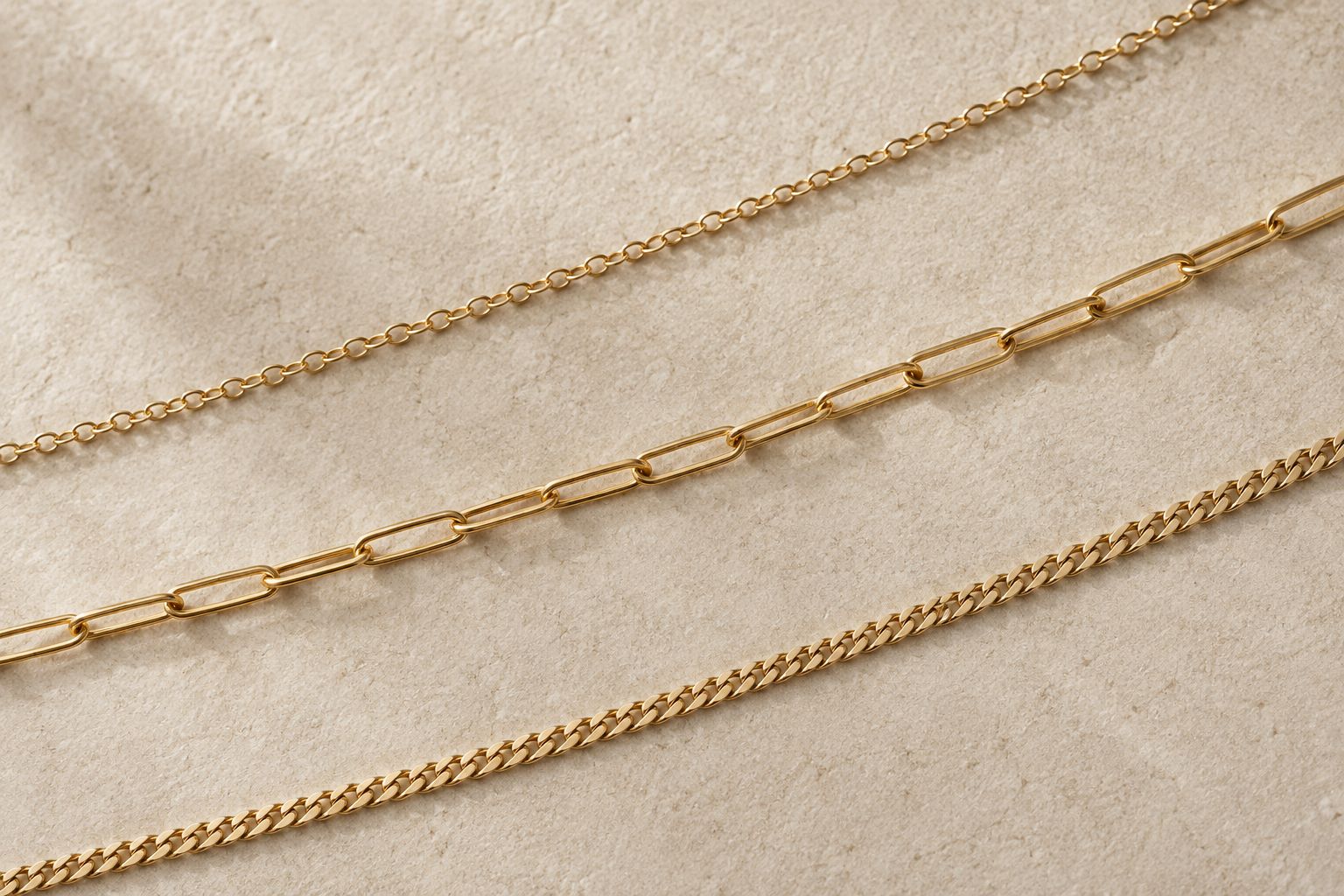
Bring the jewellery you already wear to the fitting. If stacking rings carry most of your personal detail, a simpler bracelet gives them space; if your rings are plain, a patterned chain can provide contrast.
Metal and fit: the checks that matter in 2026
A gold colour does not tell you the chain's composition. Solid gold, gold-plated jewellery and other gold-coloured constructions are not interchangeable descriptions.
For reference, 9ct gold contains 37.5% gold, while 18ct gold contains 75% gold. These figures describe gold content, not a complete durability ranking; alloy composition and chain construction also matter.
Black Betty offers permanent jewellery, but confirm the exact chain metal and construction for your chosen service. A product elsewhere in a jewellery collection does not establish the specifications of a welding chain.
During fitting, check these points before the link is closed:
- Resting fit: The chain sits comfortably without pressing into your skin.
- Movement: You can bend and rotate your wrist without restriction.
- Everyday contact: Your watch, cuffs and usual jewellery do not crowd the chain.
- Removal plan: You understand how the bracelet is removed and what to do if it catches.
For your 2026 appointment, use the contact page to confirm service details and discuss your preferred silhouette. Describe the result you want rather than requesting a chain name alone.
How the styles are ranked
This 2026 ranking prioritises visual simplicity, then openness, profile and pattern. Fine cable takes the default position because its uniform links answer the understated brief most directly; paperclip and curb serve distinct preferences rather than competing for the same effect.
The ranking is a style guide, not a strength test. No chain earns a durability claim from its name alone, and no recommendation replaces an assessment of the actual chain and fit.
Which permanent bracelet should you choose?
Choose a fine cable chain if you are undecided. Choose slim paperclip for visible space, fine curb for a flatter line, Figaro for a changing link pattern, or rope for texture.
For a Black Betty permanent bracelet in 2026, start with the look you want and confirm the practical details directly. Personal meaning can come from choosing and wearing the piece; it does not require a charm or a promised effect from a gemstone.
FAQ
What's the best permanent bracelet chain for a dainty look?
A fine cable chain is the best starting point for a dainty look because its repeated links create a simple outline. Compare the actual link size, wire thickness and fit before choosing.
Is a paperclip chain too chunky for a permanent bracelet?
A slim paperclip chain can look dainty when its link proportions suit your wrist. Check link length as well as width, because long links make a stronger visual statement.
Is a permanent bracelet really permanent?
A permanent bracelet has a welded closure rather than a conventional clasp, but it can be removed. Ask your jeweller to explain safe removal and what happens if the chain is damaged.
Does Black Betty offer permanent bracelets?
Black Betty offers permanent jewellery services, also described as zapping. Confirm the exact chain choices, materials and service arrangements directly before planning your visit.
Is the thinnest permanent bracelet chain the best choice?
The thinnest chain is not automatically the best choice. Choose a visually delicate construction that your jeweller considers appropriate for your fit and routine.
Can I wear a permanent bracelet with stacking rings?
You can style a permanent bracelet with stacking rings by balancing their visual detail. A simple cable chain leaves room for a more expressive ring stack, while a patterned chain adds interest beside plain bands.
Can I shower or swim with a permanent bracelet?
Showering and swimming suitability depend on the exact metal and construction. Ask for care instructions for your chosen chain rather than treating all permanent jewellery as waterproof.
How tight should a permanent bracelet fit?
A permanent bracelet should allow comfortable wrist movement without pressing into your skin. Check the fit while bending your hand and wearing your usual watch or cuffs before the link is welded.
One last thing
Try your preferred chain without any added detail first. If you already like how it moves and sits against your skin, you have found the important part.
A dainty bracelet does not need to disappear. It needs to feel like something you chose for yourself.