
Take your birthstone necklace off before showering, even if you wear it every day. Soap, shampoo and repeated wetting add avoidable exposure, while the right care depends on the gemstone, metal, finish and setting—not simply whether the necklace is gold or silver.
- Remove your birthstone necklace before showering; everyday jewellery is not automatically shower-safe.
- Black Betty birthstone necklaces suit shoppers choosing personal gemstone jewellery, not pieces to leave on in water.
- Check the stone, metal and finish before cleaning; gold plating and solid gold need different consideration.
- After accidental wetting, gently dry your necklace and check for residue or movement in the setting.
Why this matters
A birthstone necklace often becomes the piece you reach for without thinking. That familiarity is lovely, but it can blur the distinction between jewellery you wear daily and jewellery you never remove.
Black Betty describes The Birthstone Necklace as a natural, faceted gemstone on a fine chain. Those details describe its form; they do not establish that every gemstone or metal variation tolerates shower products.
For your 2026 jewellery-care routine, keep the rule simple: put your necklace on after washing and applying personal-care products. You do not need to stop wearing something meaningful regularly. Give it a dry place to rest while you shower.
Can you shower in a birthstone necklace?
The practical answer is no: remove a birthstone necklace before you shower. Plain water, shampoo, body wash, heat and towel friction are different exposures, and a finished necklace combines several materials and components.
An accidental splash is not the same as repeated showering. If your necklace gets wet once, assess what happened rather than assuming it is ruined—or treating the absence of visible damage as proof that showering is safe.
| Necklace material or detail | What it offers | Shower-care limitation | Best for |
|---|---|---|---|
| Solid gold | Gold alloy throughout, rather than a surface layer of gold | The gemstone, setting and other alloy metals still need consideration | Someone who wants gold throughout the metal component |
| Sterling silver | A silver alloy that can be cleaned using an appropriate method | Tarnish and surface residue still require care; stone-safe cleaning comes first | Someone who prefers a silver finish and accepts routine maintenance |
| Gold-plated metal | A gold surface over another metal | The finish needs gentle handling; repeated abrasion wears plating | Someone who wants a gold finish and follows plating-specific care |
| A gemstone pendant | Colour, shape and personal symbolism | Care varies with the stone and any treatments | Someone choosing a piece around a particular birthstone |
| A fine chain | A delicate line that keeps attention on the pendant | The chain and clasp need checking independently of the stone | Someone who prefers an understated necklace |
These are care distinctions, not a ranking of better and worse jewellery. Choose the material you want to live with, then give the whole necklace—not just its most durable part—the care it needs.
What should you check before wearing it near water?
- Identify the gemstone. A birthstone label alone does not tell you the stone's care requirements or whether it has been treated.
- Confirm the metal and finish. Look for a clear distinction between solid gold, sterling silver and gold-plated metal.
- Read the care instructions. Follow guidance for the complete necklace, including its setting and chain.
- Ask about anything unclear. Confirm cleaning suitability before trying a soak, jewellery dip or cleaning device.
Keep those details with your purchase information. A photograph shows how a necklace looks, but it does not record everything you need to know about caring for it.
Solid gold birthstone necklaces: check the whole piece
Solid gold does not make a gemstone necklace maintenance-free. A necklace can have gold metal components and still contain a stone that needs protection from heat, chemicals or a particular cleaning method.
For context, 9kt gold contains 37.5% gold by mass. The remaining metals form the alloy; the gold designation does not describe the gemstone, its treatments or the construction of the clasp.
The benefit is a gold alloy throughout the specified component rather than a gold surface coating. The limitation is that the metal description cannot stand in for care instructions for everything attached to it.
If you are choosing gold jewellery in 2026, ask two separate questions: what is the metal, and how should this particular gemstone necklace be cleaned? A useful answer addresses both.
Sterling silver birthstone necklaces: keep cleaning stone-safe
Sterling silver contains 92.5% silver by mass, often expressed through a 925 mark. That describes the alloy, not a promise that showering will keep the necklace clean or prevent tarnish.
The practical advantage of sterling silver is that appropriate care can address surface tarnish. The catch is that a method suitable for bare silver is not automatically suitable for a mounted gemstone.
Do not immerse a birthstone necklace in silver dip simply because the chain is silver. Check the cleaner's instructions and the gemstone's requirements first, particularly when the stone's identity or treatment is unclear.
Dry storage and gentle handling are useful habits. Aggressive rubbing around a pendant is not a substitute for choosing the right cleaning method.
Gold-plated birthstone necklaces: protect the finish
Gold plating is a surface layer, so care needs to protect that layer as well as the stone beneath your attention. Repeated rubbing and abrasive cleaning wear the finish; scrubbing harder is the wrong response to dullness.
The benefit is the appearance of gold over another metal. The trade-off is a finish that needs its own care, rather than the same treatment you would give an unplated gold alloy.
Remove a plated necklace before showering and avoid abrasive polishes. If you do not know the base metal or plating specification, ask rather than assuming the word gold tells the whole story.
For a 2026 care checklist, record the finish explicitly. It is easy to remember the colour of a necklace and forget how that colour was achieved.
Why shower-care advice varies
Birthstone necklaces do not share a single material specification. These details explain why advice for one piece should not be applied to every other necklace in your collection:
- Gemstone identity. Different gemstones respond differently to heat, chemicals and cleaning methods. A stone's resistance to scratching is not a complete measure of its durability.
- Gemstone treatment. Fillings, coatings and other treatments can change suitable care. Confirm treatment information instead of judging from appearance.
- Metal and finish. Solid gold, sterling silver and gold plating are different constructions. A suitable polish for one is not automatically right for another.
- Setting. The pendant needs secure stone retention as well as a clean surface. Stop wearing a piece if the stone moves or a setting catches unexpectedly.
- Chain and clasp. A sound-looking pendant does not establish that every link and fastening is in good condition. Check the complete necklace before putting it back on.
Care for the most sensitive component, not the toughest one. That rule is more useful than deciding a necklace is safe because its metal or gemstone has a reputation for durability.
What should you do if you accidentally shower in it?
Remove the necklace carefully and place it somewhere secure. Do not tug it through wet hair or rub the pendant with a towel while it is still around your neck.
Blot dry
Use a clean, soft cloth to lift away surface moisture. Support the pendant and chain rather than pulling the necklace through the cloth.
Check residue
Look around the stone, beneath the setting and near the clasp for visible soap or product build-up. Drying removes moisture; it does not necessarily remove what the water carried.
Check condition
Look for a moving stone, an open link or a clasp that does not close properly. If something feels different, stop wearing the necklace until a jeweller checks it.
Ask before cleaning
If residue remains, choose a cleaning method only after confirming the stone and finish. Do not improvise with toothpaste, household cleaners, steam or an ultrasonic machine.
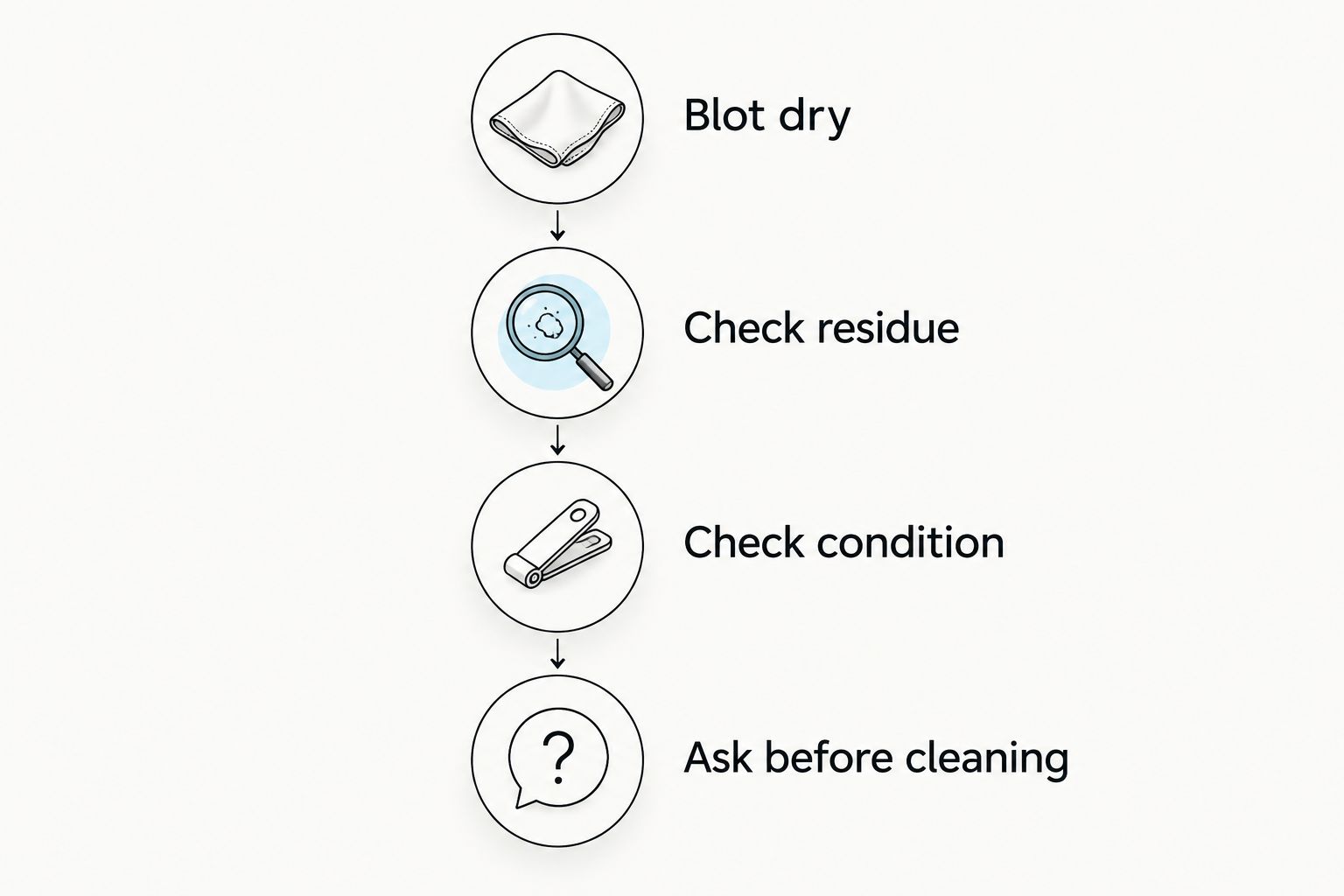
One accidental shower does not establish a damage timeline. There is no useful universal number of showers after which every necklace fails, because the materials, condition and exposures differ.
Choosing a birthstone necklace to wear often
Black Betty birthstone necklaces are best for South African shoppers choosing personal gemstone jewellery they will remove before showering. Choose the shape and scale you enjoy, then confirm the material details for your selected variation.
The Birthstone Necklace centres a natural, faceted gemstone on a fine chain. Its appeal is a simple gemstone focus; the care limitation is that the description alone does not establish water resistance or a cleaning method for every variation.
The Pear Birthstone Necklace features a natural 6x4mm pear-cut gemstone. It suits someone who prefers a directional shape, but those dimensions describe the stone—not the chain length, necklace fit or shower suitability.
Neither piece needs a promise of constant wear to become part of your day. A necklace can carry personal meaning while spending your shower safely off your skin.


Can you wear a birthstone necklace every day?
Everyday wear does not mean uninterrupted wear. You can build a daily routine around putting your necklace on after washing and taking it off before activities that expose it to water, chemicals or snagging.
When pairing a necklace with stacking rings, consider each piece separately. Matching gemstones or metal colours do not establish identical care requirements, and rings encounter different contact during ordinary hand use.
Does a hard birthstone make the necklace shower-safe?
A hard gemstone does not make the complete necklace shower-safe. Hardness measures resistance to scratching; it does not describe every response to heat, chemicals, impact or treatment-sensitive cleaning.
The metal finish, setting and chain still matter. Do not let one reassuring material detail override the care needs of the rest of the necklace.
FAQ
Can I shower in my birthstone necklace every day?
Remove your birthstone necklace before daily showers. Repeated exposure to soap, shampoo and wetting is avoidable, and suitable care depends on the gemstone, metal, finish and setting.
Is my birthstone necklace ruined if I showered in it once?
One accidental shower does not establish that your necklace is ruined. Gently dry it, check for residue and inspect the stone, chain and clasp; ask a jeweller about changes or remaining build-up.
Can I shower in a solid gold birthstone necklace?
Solid gold alone does not establish that a birthstone necklace is shower-safe. The gemstone, any treatments and the rest of the construction still determine appropriate care.
Does sterling silver mean my necklace is waterproof?
Sterling silver describes an alloy, not waterproof performance. It contains 92.5% silver by mass, but that figure says nothing about the mounted gemstone's cleaning requirements.
Can I clean a birthstone necklace with toothpaste?
Do not use toothpaste as a jewellery cleaner. Abrasive ingredients can damage surfaces; choose a method suited to the identified gemstone and metal finish instead.
Can I put my birthstone necklace in an ultrasonic cleaner?
Do not use an ultrasonic cleaner without confirming that the entire necklace is suitable. Some gemstones and treatments require different care, and the setting's condition also matters.
Should I take my necklace off before applying perfume?
Take your necklace off before applying perfume or other personal-care products. Let your skin dry before putting the necklace back on to avoid direct application onto the jewellery.
One last thing
Make removal easier than remembering. Put a dedicated jewellery dish somewhere dry, away from the basin edge, so your necklace has a familiar place before you turn on the shower.
For 2026, that small habit is more useful than chasing a universal waterproof label. Meaningful jewellery deserves regular wear and considered care; you do not have to choose between them.